

QUANTUM MATERIALS & TECHNOLOGIES
We develop materials and device solutions for semiconductor electronics, photonics, spin-based systems and quantum technologies, addressing the properties and interfaces that determine their function.
Materials, devices and spin systems
Our expertise connects semiconductor microelectronics and optoelectronics, light-emitting devices, organic and 2D field-effect transistors, magnetoelectronic memory systems and quantum information technologies. We study how composition, interfaces and architecture determine electrical, optical and spin-related behaviour.
Characterisation and modelling
Experimental characterisation and numerical modelling guide material and device development, including low-temperature operation, control and integration. We apply these capabilities to client-defined challenges and collaborative technology programmes. The projects below illustrate this approach at their respective research and development stages.
Current research programmes

QAPROS
Initiated by QUANTUMAT, QAPROS investigates atom-like spin centers in organic and inorganic semiconductor host matrices. Room-temperature quantum information processing and scalable integration are research objectives.
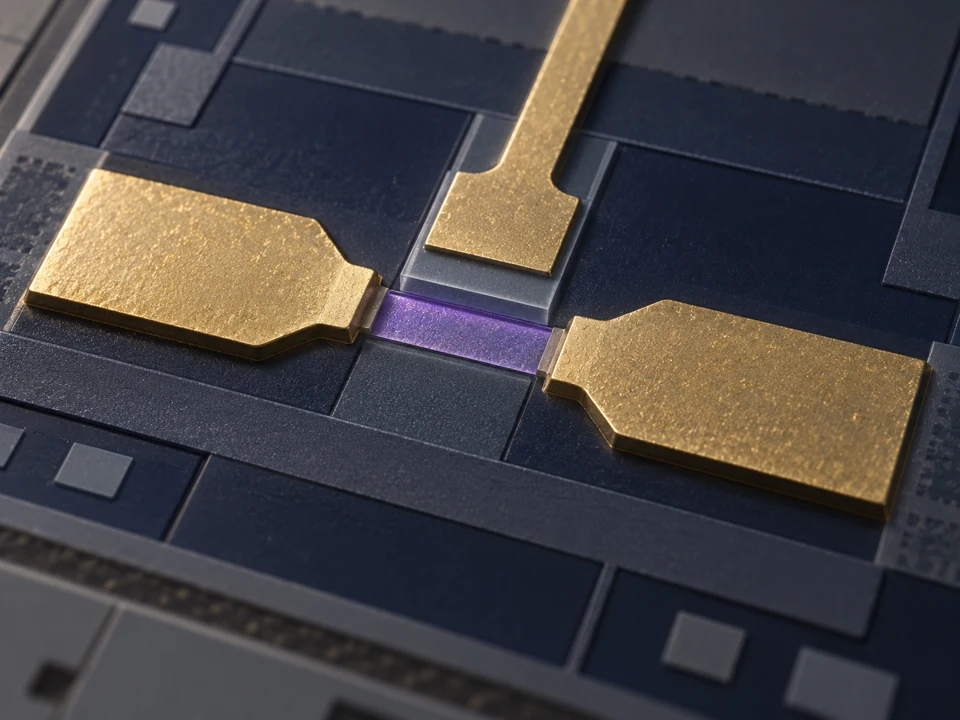
2D electronics for cryogenic quantum controllers
Initiated by Tyndall National Institute, which produces the materials and fabricates the transistors. QUANTUMAT contributes device characterisation, ultra-low-temperature physics, and advice on material and device architecture and optimisation.
Experimental development
01
Material and device concepts
Select candidate platforms against each programme’s physical and engineering requirements.
02
Measurements
Use optical, spin and electrical measurements to investigate behaviour and guide development.
03
Integration
Study photonic interfaces and cryogenic electronic control as distinct research paths.
Collaborations & Partnerships



News & Updates
Explore news from QAPROS and our cryogenic quantum-electronics project.
Documents & Publications
Browse the document sections for QAPROS and cryogenic quantum electronics.