
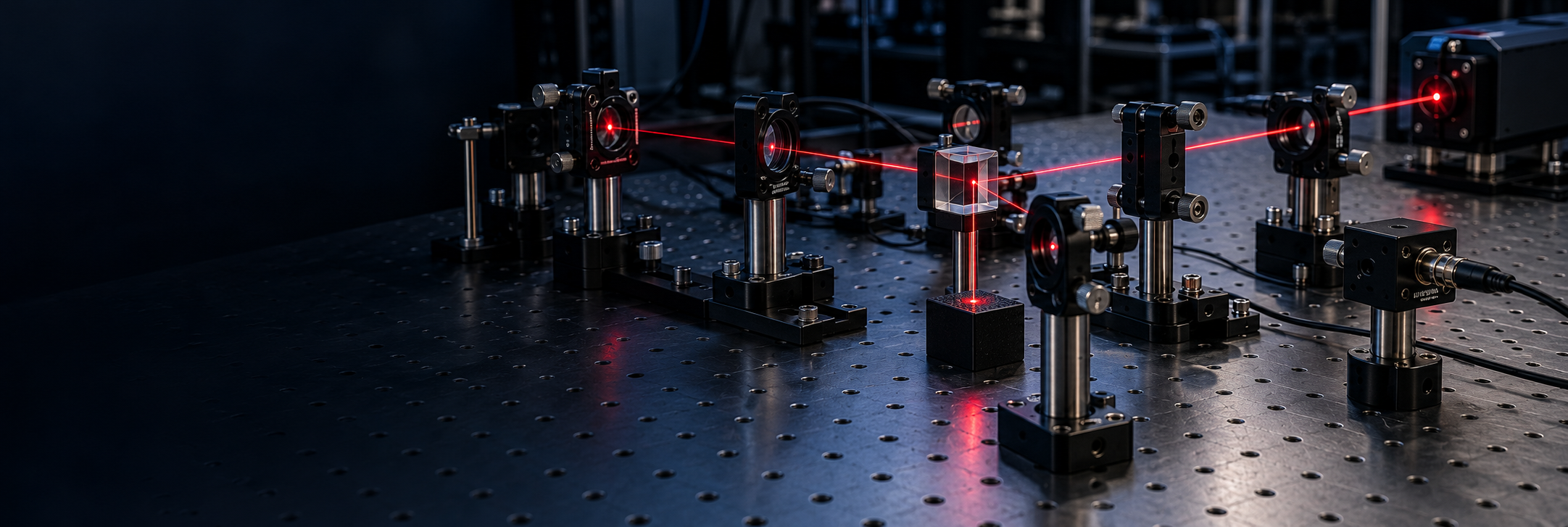
Applied physics and materials engineering
QUANTUMAT is a French technology development company founded by Khashayar Khazen and Sanaz Haghgou. Materials science and engineering form the common foundation of our work across advanced materials, quantum technologies and energy storage. We connect material composition, structure, properties and functionality with the performance required of a component, device or process.
QUANTUMAT develops technological solutions where existing materials, devices or processes fall short of an application’s requirements. We combine in-house scientific and engineering expertise with a specialist international network spanning academia and industry. Development is directed towards a concrete outcome: a material, component, device or process that resolves the client’s technological challenge.
We also initiate and invest in our own technology programmes, identifying opportunities where our expertise can address emerging industrial needs. Developed through internal funding and co-investment, these programmes position QUANTUMAT as the project initiator or a principal development partner, with the objective of bringing new technologies into industrial application.
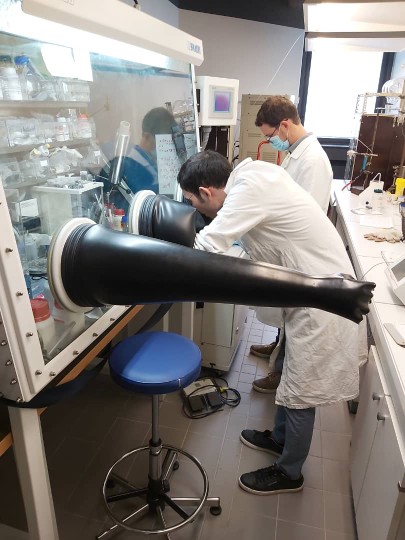
Three departments, a shared engineering approach

Department of Quantum Materials and Technologies
Functional materials and devices for electronics, photonics and quantum technologies. Our scope includes semiconductor microelectronics and optoelectronics, light-emitting devices, organic and 2D field-effect transistors, magnetoelectronic memory systems, spin-based platforms and quantum information technologies. We investigate material and device behaviour, including low-temperature operation, and address measurement, control and integration requirements.
Department of Energy Storage Materials and Devices
Materials and device development for electrochemical energy storage. Activities cover active materials and interfaces, electrode formulations and architectures, processing and cell prototyping, and electrochemical performance assessment. We connect material selection and manufacturing conditions with capacity, charging behaviour, cycling stability and application requirements.
Department of Advanced Materials
Design, development and production of functional materials in powder, thin-film, single-crystalline and polycrystalline forms. Our scope includes 2D materials, nanostructures and catalysts, high-purity oxides, dielectric and doped systems, solid solutions, superconducting materials, and functional formulations for coatings and construction applications. Composition, internal structure and external form are treated as connected engineering variables.
Our current projects illustrate selected applications of this expertise. They are examples of work in progress, and do not limit the questions or applications each department can address.
An integrated development approach
01
Design
Define composition, structure, geometry and target function.
02
Develop
Select and refine the synthesis and manufacturing route.
03
Characterise
Measure material and device behaviour and investigate defects.
04
Model & refine
Use numerical analysis alongside experiments to guide the next step.
Manufacturing routes chosen for the material and the part
We select and develop production routes according to the required material characteristics, component geometry and functional performance. Approaches range from thin-film deposition and solid-state synthesis to sol–gel processing, powder and polycrystalline material processing, and additive manufacturing, including 3D printing. Solid-solution formation, doping and interface engineering provide additional ways to tailor material properties.
A project may require one route or a combination of methods. We connect process selection and experimental development with characterisation, so that manufacturing decisions can be assessed against the behaviour of the resulting material, component or device.
In-depth characterisation and numerical modelling
The advanced characterisation methods accessible to our group and research network support detailed analysis of materials, components and devices. Structural, chemical and morphological investigation is combined with the measurement of relevant electrical, optical, magnetic, thermal or electrochemical properties.
This evidence helps us identify structural and functional defects, investigate their origins and develop strategies to resolve them. Our numerical modelling specialists work alongside the experimental team, using simulations to test interpretations, guide design choices and refine the next stage of experiments.
R&D laboratories and pilot production capabilities
Our engineering scope extends from the design and equipping of R&D laboratories to the design and equipment specification of pilot production lines. We translate research or production objectives into experimental workflows, process sequences, equipment requirements and characterisation plans.
Support can include equipment selection and integration, commissioning planning and process development. The aim is to establish the capabilities needed to develop, evaluate and transfer a material or process towards production.

Khashayar Khazen, PhD
President, Co-founder

Sanaz Haghgou, PhD
Co-founder
Rigour, responsibility and collaboration
We value reliable measurements, accurate interpretation and clear communication of results and limitations. Responsibility towards people and the environment, collaborative expertise and continuous improvement guide our development work.